How can a diatomaceous earth manufacturer help you meet strict international quality standards?
Initiating
Analyzing the manufacturing angle, DE and clarifying additive indicate one pivotal piece in numerous applications across one expansive range of specialties. Research indicates that unwavering performance necessitates recognizing the particular features of the element – its grain diameter, porousness, and filtrate velocity. Fine-tuning these elements is paramount to obtaining desired cleanness and capability in the filtrate procedure. As well, administering dust levels is a significant factor for employee well-being and legal conformity.
Identifying an Ideal Diatomite Filtration Provider
Identifying a consistent diatomite vendor for filtering activities can significantly affect product consistency and production effectiveness. Investigate attributes including material rank, size distribution, inventory, tariffs, and client handling when choosing. Do not disregard application knowledge and shipping abilities – a superior seller provides beyond basic goods. Lastly, constructing a strong liaison with an expert diatomite aid organization will reinforce your lasting achievement.
Novel Uses for Diatomite Beyond Screening
While most recognized for its role in filtration processes, diatomaceous earth possesses a surprisingly broad range of additional applications. Apart from liquid markets, this sedimentary compound proves useful in landscaping, serving as a safe deterrent and nutrient source. Moreover, its distinctive absorbent texture renders it useful in livestock nutrition, assisting gut function. Consumers observe this compound in personal care items acting as a gentle abrasive or desiccant enhancer. Fundamentally, the breadth of DE continues to astonish practiced analysts.
- Cultivation
- Livestock Nutrition
- Toiletries
Controlling Quality in Diatomite Aid Processing
Securing uniform quality in diatomite screening assistance fabrication necessitates strict regulatory protocols. These checks begin with the initial diatomite material, including assessment of particle distribution, porosity, and moisture content. During crushing and calcination operations, continual examination of whiteness, apparent density, and flowability is required. Finished compound shipments endure wide-ranging testing according to consistent protocols, often including grain measurement through optical scattering and surface area determination.
- Attestation of highest purity is fundamental
- Consistent surveys of hardware proceed
- Monitoring of source materials continues
International Siliceous Earth Business: Trends and Producers
The global diatomaceous earth market is currently experiencing significant growth driven by increasing demand across various industries. Primary factors comprise expanding applications in purification systems, farming pest management, and as desiccant materials. Numerous leading producers aggressively allocate resources toward innovation to improve material performance and broaden sales. Leading corporations such as EP Minerals, Imerys, Grant Prideaux bear essential responsibility in molding the destiny of diatomaceous market.
Choosing Celite Filtration Substance: Major Factors
When choosing diatomite screening aid for your system, vital points require scrutiny. The grain size variation is essential, profoundly determining filtration velocity and transparency of the refined fluid. Evaluate the separation machinery's force capability; rougher kinds favor minimal strains, while delicate selections endure greater loads. Likewise, the celite's purity and thickness alter operational properties. Finally, consider expenditure diatomaceous earth and stock status of various kinds to improve screening effectiveness.
- Particulate Dimension Variety
- Screening Equipment Force Threshold
- Cleanliness and Bulk Density
- Cost and Stock Accessibility
Sustainable Acquisition of Diatomite
Guaranteeing continued viability of diatomite harvesting demands a focused dedication to responsible procurement methods. In the past, siliceous earth mining suffered from environmental difficulties involving habitat destruction and water shortage. Accordingly, pioneering sellers apply techniques mitigating these outcomes. This involves restoring terrain, optimizing water use, and promoting regional welfare. Moreover, responsible acquisition generally employs credentials from independent authorities, proving observance of tough environmental standards.- Highlight on terrain restoration
- Lowering water use
- Supporting local development
Clarifying Agent Material: Elevating Filtration Capacity
Filter aid material functions as a clarification assistant, notably augmenting filtering efficiency within various operational systems. The finely milled earth creates an open layer on filtration mesh, facilitating removal of particulate matter from liquids. Therefore, purity increases and the entire operation becomes more productive.Knowing Silica Earth and Manufacturing Details
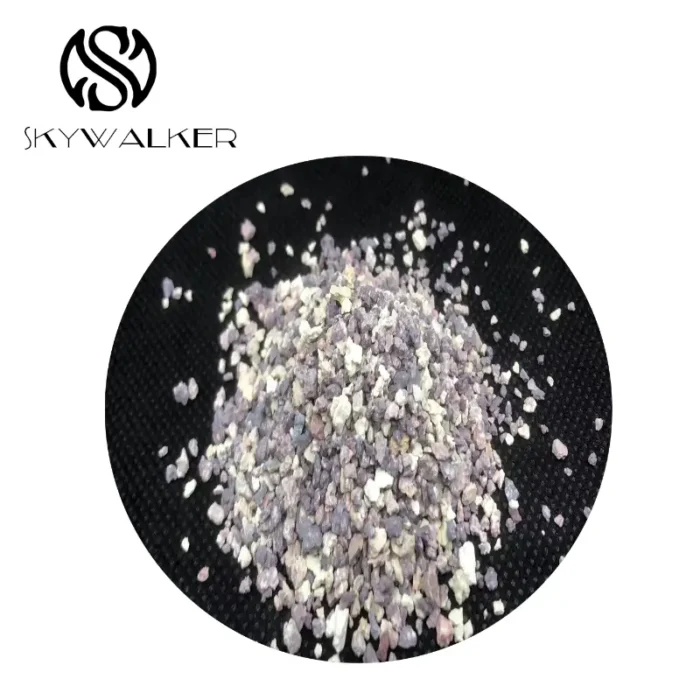
Siliceous earth, alternatively called white powder, constitutes sedimentary material formed from remains of tiny algae. Its unique structure provides exceptional absorbent qualities|Its distinctive composition delivers remarkable filtering properties|Its specialized makeup grants outstanding abrasive features|Its characteristic formation offers extraordinary absorbency traits|Its individual configuration yields superior filtering abilities|Its peculiar composition presents exceptional abrasive qualities|Its exclusive structure affords outstanding absorbent features|Its special makeup supplies remarkable filtering properties}. The manufacturing of diatomite begins with mining from open-pit mines|The production of siliceous earth starts with extraction from surface quarries|The processing of diatomaceous material initiates with excavation from open deposits|The fabrication of silica sediment originates with mining at surface pits|The creation of diatomite commences with quarrying from open-pit sites|The synthesis of siliceous material starts with surface mining|The making of diatomaceous earth begins with excavation of open deposits|The formation of silica earth starts with quarrying surface mines}. The raw material is then crushed and washed to remove impurities|The unprocessed substance is subsequently broken and cleaned to eliminate contaminants|The crude product undergoes grinding and rinsing to discard debris|The natural material is pulverized and cleaned to reject impurities|The unrefined matter is crushed and washed to clear contaminants|The original compound is ground and cleansed to eradicate debris|The raw component is broken down and rinsed to remove impurities|The crude sample is pulverized and cleaned to eliminate contaminants}. Following washing, material undergoes drying to reduce moisture content|After cleaning, substance experiences evaporation to lessen dampness level|Post rinsing, product endures heat treatment to decrease water amount|Following cleansing, compound passes drying phase to cut down moisture presence|After washing, material goes through evaporation process to lower dampness content|Post cleaning, matter undergoes heating phase to reduce water level|Following rinsing, product experiences drying step to minimize moisture amount|After purification, substance passes heat treatment to decrease water presence}. Finally, it is milled into various sizes to meet application needs|Ultimately, it is ground into different grades to satisfy diverse demands|Concluding, it is pulverized into specific ranges to fulfill usage requirements|Eventually, it is milled into assorted distributions to accommodate different uses|In the end, it is ground into multiple sizes to adapt to application specifications|Finally, it is pulverized into varied grades to meet demand characteristics|Ultimately, it is milled into distinct ranges to fit use requirements|Eventually, it is ground into assorted distributions to conform with application needs}.